
Seeing Isn’t Always Believing: A physio’s view on scans
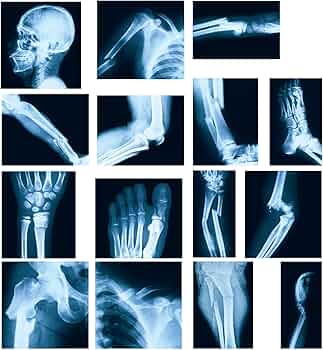
Imaging: When Do You Actually Need It?
When you’re in pain, it’s completely understandable to want answers.
One of the first questions many people ask when they develop an injury is: “Should I get an
MRI or an X-ray?”
It can feel reassuring to think that if we can see exactly what is wrong, we can finally
understand the cause of the pain and know exactly how to fix it, but in physiotherapy, things aren’t always quite that simple.
Seeing something on a scan doesn’t necessarily mean that it is the cause of your
pain. In fact, imaging can sometimes create more questions than answers.
What is imaging?
There are several different types of imaging commonly used in musculoskeletal healthcare:
● X-rays – commonly used to assess bones, fractures and joint changes such as
osteoarthritis.
● MRI scans – provide detailed images of muscles, tendons, ligaments, discs and
other soft tissues.
● Ultrasound – can assess certain muscles, tendons and other soft tissues
dynamically and is often useful for specific tendon or muscle problems.
● CT scans – provide detailed images of bones and are particularly useful for certain
fractures and more complex injuries.
Each has it’s place, but the best investigation depends on the clinical problem.
So, why don’t we just scan everything? Because our bodies naturally change as we get older.
This is particularly important when looking at MRI scans as research has shown that many people with no pain at all can have findings on an MRI that might sound concerning. For example, disc bulges and degenerative changes in the spine are extremely common, even in people who have never experienced back pain.
The same principle applies to many joints. Someone may have a meniscal tear, tendon changes, cartilage wear or degenerative changes visible on a scan without those findings actually being responsible for their symptoms.
This is why we need to be careful about assuming:
“The scan shows a problem, therefore the scan has found the cause of my pain.” but,
it hasn’t necessarily. Your scan doesn’t know how you feel and one of the most important things to remember is that a scan is a picture – not a diagnosis by itself.
A physiotherapist or doctor will consider several things when assessing an injury:
Your symptoms: Where is your pain? When does it occur? What makes it better or worse?
Your history: Did the pain start suddenly after an injury, or has it gradually developed?
Your physical examination: How are your strength, movement, coordination and function?
Your goals: What are you trying to get back to doing?
The imaging: If imaging is appropriate, it can provide additional information that helps build the overall clinical picture.
The scan is therefore one piece of the puzzle, rather than the entire puzzle.
When can imaging be useful?
There are certainly situations where imaging is extremely valuable.
For example, imaging may be appropriate when:
● A significant fracture is suspected.
● There has been significant trauma.
● There are concerning or unexplained symptoms.
● Symptoms aren’t improving as expected despite appropriate rehabilitation.
● A serious underlying condition needs to be ruled out.
● The results could change the treatment plan.
● Surgery or another specialist intervention is being considered.
In these situations, imaging can provide important information and help guide the next stage
of treatment.
When might imaging not be necessary?
For many common musculoskeletal problems, a thorough clinical assessment can provide
enough information to start treatment without immediately needing a scan.
Examples can include many cases of:
● Non-specific lower back pain
● Muscle strains
● Tendinopathies
● Many shoulder problems
● Common knee pain
● Some sports injuries
● Mechanical neck pain
This doesn’t mean that imaging is never required for these conditions.
Instead, it means that the decision should be based on the individual person rather than the body part alone.
“But I want to know exactly what’s wrong.”
This is completely understandable.
As healthcare professionals, we want answers too. However, sometimes knowing that an MRI shows a particular change doesn’t actually change what we need to do to help.
For example, if someone has back pain and an MRI shows degenerative disc changes, the
most appropriate treatment may still involve education, exercise, gradual exposure to
movement and building confidence in normal activity.
In other words: The scan may give us a name for something, but it doesn’t necessarily give us the solution. The problem with over-relying on imaging is there can also be a downside to finding something on a scan.
Imagine being told:
“You’ve got a disc bulge.”
Or: “You’ve got degeneration in your knee.”
Or: “You’ve got a tendon tear.”
These terms can sound frightening and a person may understandably begin to believe that their body is damaged, fragile or unsafe to use.
This can sometimes lead to fear of movement, avoidance of activity and reduced confidence
in the body. Yet the reality is often much more reassuring.
Many of the changes seen on imaging are normal parts of ageing and do not
automatically mean that your body is damaged or that you shouldn’t move.

Treat the person, not just the picture
This is one of the principles we strongly believe in at Plym Physio.
Two people can have almost identical MRI findings but completely different symptoms.
One person might have significant pain and difficulty walking, whereas another might have the same findings and be running, lifting weights and playing sport without any problems.
So, if we simply treated the scan, we would potentially give both people the same treatment. Except they aren’t the same person; their symptoms, lifestyle, goals, strength, movement, beliefs and circumstances are all different.
Good physiotherapy looks at the whole person – not just the scan.
What should you do if you’re considering a scan?
If you’ve been experiencing pain and are wondering whether you need an X-ray, MRI or
another form of imaging, the best starting point is often a thorough clinical assessment.
A physiotherapist can assess your symptoms, movement, strength and function and
determine whether your presentation is appropriate for physiotherapy management or
whether further investigation may be beneficial.
Furthermore and importantly, if imaging is appropriate, we can help you understand what the
findings actually mean in relation to your symptoms, because seeing something doesn’t automatically mean you’ve found the problem.
The takeaway…
Imaging is an incredibly useful tool in modern healthcare. However, it should be used when it is clinically appropriate, rather than simply because we want to see what is happening inside the body. Your symptoms and physical examination provide crucial information that a scan cannot.
So the next time you’re wondering:
“Do I need an MRI?”
The better question might be:
“Will an MRI change what we do next?”
Sometimes the answer will be yes. Sometimes it will be no.
And that’s why seeing isn’t always believing.
If you’re interested in speaking to one of our physios, call (01752) 656340, or book yourself in here: Book Now – Plym Physio